

How to Choose the Perfect Lab-Grown Diamond Engagement Ring for Valentine's Day
Step 1: Understand the 4 Cs of Lab-Grown Diamonds
Before selecting your Valentine's Day engagement ring, familiarize yourself with the four essential characteristics that determine a diamond's quality and value:
- Cut: The most important factor affecting brilliance and sparkle. Look for Excellent or Ideal cut grades for maximum fire and light performance.
- Color: Ranges from D (colorless) to Z (light yellow). For engagement rings, we recommend D-F (colorless) or G-H (near colorless) grades.
- Clarity: Refers to internal inclusions. VS1-VS2 grades offer excellent value with no visible imperfections to the naked eye.
- Carat: The weight of the diamond. Consider your partner's lifestyle and preferences when selecting size.
Lab-grown diamonds are chemically and optically identical to mined diamonds, offering the same brilliance at exceptional value while being conflict-free and sustainable.
Step 2: Determine Your Budget
Valentine's Day is the perfect time to invest in forever. Lab-grown diamonds typically cost 30-40% less than mined diamonds of comparable quality, allowing you to:
- Choose a larger carat size within your budget
- Upgrade to a higher quality grade (better cut, color, or clarity)
- Invest in a more intricate setting or design
- Save for your wedding bands or honeymoon
Consider using Shop Pay Installments to make your dream ring more accessible with flexible payment options.
Step 3: Choose the Right Diamond Shape
The diamond shape reflects your partner's personal style:
- Round Brilliant: Classic and timeless, offers maximum sparkle (most popular choice)
- Princess: Modern and geometric with brilliant faceting
- Oval: Elongated and elegant, creates the illusion of longer fingers
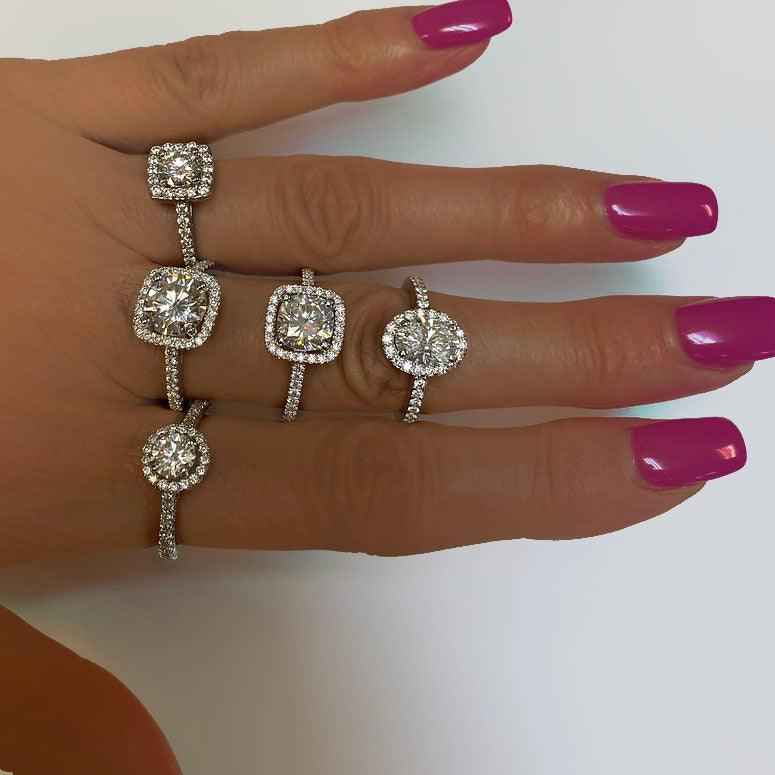
- Cushion: Romantic vintage appeal with soft, rounded corners
- Emerald: Sophisticated step-cut with elegant hall-of-mirrors effect
- Pear: Unique and feminine teardrop shape
- Marquise: Dramatic and elongating with pointed ends
Think about jewelry your partner already wears—do they prefer classic or contemporary styles?
Step 4: Select the Perfect Setting
The setting showcases your diamond and reflects personal style:
- Solitaire: Timeless single-stone setting that emphasizes the diamond
- Halo: Center stone surrounded by smaller diamonds for added sparkle and size
- Three-Stone: Symbolizes past, present, and future
- Pavé: Band adorned with small diamonds for continuous sparkle
- Vintage-Inspired: Intricate details and milgrain for romantic, heirloom appeal
Consider your partner's lifestyle—active lifestyles may benefit from lower-profile settings, while those who love glamour might prefer statement designs.
Step 5: Choose Your Metal
The metal complements both the diamond and your partner's skin tone:
- Platinum: Durable, hypoallergenic, naturally white (premium choice)
- 18K White Gold: Bright white appearance, requires occasional rhodium plating
- 18K Yellow Gold: Warm, classic, and timeless
- 14K Rose Gold: Romantic pink hue, increasingly popular for modern brides
Look at what metal your partner currently wears in their everyday jewelry.
Step 6: Get the Ring Size Right
For a Valentine's Day surprise proposal:
- Borrow a ring they currently wear on their ring finger (left hand, fourth finger)
- Trace the inside of the ring on paper or press it into soap
- Ask their close friends or family members
- Check if they've mentioned their ring size before
Don't worry if you're not certain—rings can be resized after the proposal, and the surprise is what matters most!
Step 7: Verify Certification
Ensure your lab-grown diamond comes with certification from reputable gemological laboratories:
- IGI (International Gemological Institute)
- GIA (Gemological Institute of America)
- GCAL (Gem Certification & Assurance Lab)
Certification guarantees the quality and characteristics of your diamond, providing peace of mind and documentation for insurance purposes.
Step 8: Plan Your Valentine's Day Proposal
Once you've selected the perfect ring:
- Choose a meaningful location—where you first met, a favorite restaurant, or a scenic spot
- Consider timing—sunset proposals offer beautiful natural lighting
- Have a photographer ready to capture the moment (if desired)
- Prepare what you want to say from the heart
- Ensure the ring box is secure and easily accessible
Why Choose Lab-Grown Diamonds?
Lab-grown diamonds are the ethical, sustainable choice for modern couples:
- Environmentally Responsible: Minimal environmental impact compared to mining
- Conflict-Free: 100% traceable origin with guaranteed ethical sourcing
- Exceptional Value: Same physical, chemical, and optical properties as mined diamonds
- Future-Forward: Represents innovation and conscious consumerism
Ready to Find Your Perfect Ring?
This Valentine's Day, celebrate your love with a stunning lab-grown diamond engagement ring that reflects your values and your partner's unique style. Browse our curated collection of engagement rings, or contact us to create a custom design that tells your love story.
Need help selecting the perfect ring? Our diamond experts are here to guide you through every step of the process.
Written by mary importex
Visit author's website